
Every day, billions of people use Google and other search engines to find information, answer questions, discover products, learn new skills, and explore the internet. Within seconds, search engines can provide millions of results related to a user’s query. But have you ever wondered how search engines collect, understand, and display this information so quickly?
Search engines are not simply searching the live internet every time a user enters a query. Instead, they use advanced technologies such as crawling, indexing, artificial intelligence, and ranking systems to organize massive amounts of online information and deliver the most relevant results.
Understanding how Google and search engines find information can help website owners, businesses, bloggers, and everyday users better understand how online search works. This guide explains the complete process behind search technology and how information moves from websites to search results.
What Is a Search Engine?
A search engine is a technology platform designed to help users find information available on the internet. It collects data from websites, organizes that information, and provides relevant results when users search for specific topics or questions.
Popular search engines use complex algorithms to analyse billions of web pages and determine which pages are most useful for a particular search query.
Instead of manually searching every website on the internet, search engines create large databases of web content. When a user searches for something, the search engine quickly checks its stored information and presents the most relevant results.
How Search Engines Discover New Information
The first step in finding information is discovery. Search engines use automated programs called web crawlers, also known as bots or spiders, to explore the internet.
These crawlers visit websites, follow links between pages, and collect information about new or updated content. When a crawler finds a webpage, it analyses different elements such as text, images, videos, page structure, and links.
Search engines continuously crawl the internet because new websites and pages are created every day. Crawling helps search engines discover fresh information and update their databases.
For example, when a website publishes a new article, search engine crawlers may eventually find that page through links, sitemaps, or other discovery methods.
The Role of Web Crawlers in Search Technology
Web crawlers are an essential part of search engine operations. They work automatically and follow specific rules while collecting information from websites.
When a crawler visits a website, it checks whether the website allows access through a file called robots.txt. This file provides instructions about which parts of a website can or cannot be crawled.
Crawlers also consider website structure, internal links, and page accessibility. Websites with clear navigation and proper technical setup make it easier for search engines to understand their content.
However, crawling does not mean a page will automatically appear at the top of search results. After discovery, the information must go through another important process called indexing.
Understanding Search Engine Indexing
Indexing is the process of storing and organizing information collected from web pages. After a search engine crawler discovers a webpage, the content is analysed and added to a massive database known as an index.
A search engine index works like a digital library containing information from billions of webpages. When users perform a search, the engine looks through this index instead of scanning the entire internet.
During indexing, search engines examine various factors, including the meaning of content, keywords, page quality, website structure, and other important signals.
If a webpage is not indexed, it usually will not appear in search results, even if the content exists online.
How Search Engines Understand Content
Modern search engines use advanced technologies such as artificial intelligence and natural language processing to understand webpage content.
Earlier search systems mainly focused on matching exact keywords. Today, search engines can understand the meaning behind words, user intent, context, and relationships between different topics.
For example, if someone searches for “best ways to improve fitness,” search engines understand that the user may want exercise tips, healthy habits, or workout guidance rather than only pages containing the exact phrase.
Artificial intelligence helps search engines provide more accurate results by analysing language patterns and understanding what users are actually looking for.
How Google Ranks Search Results
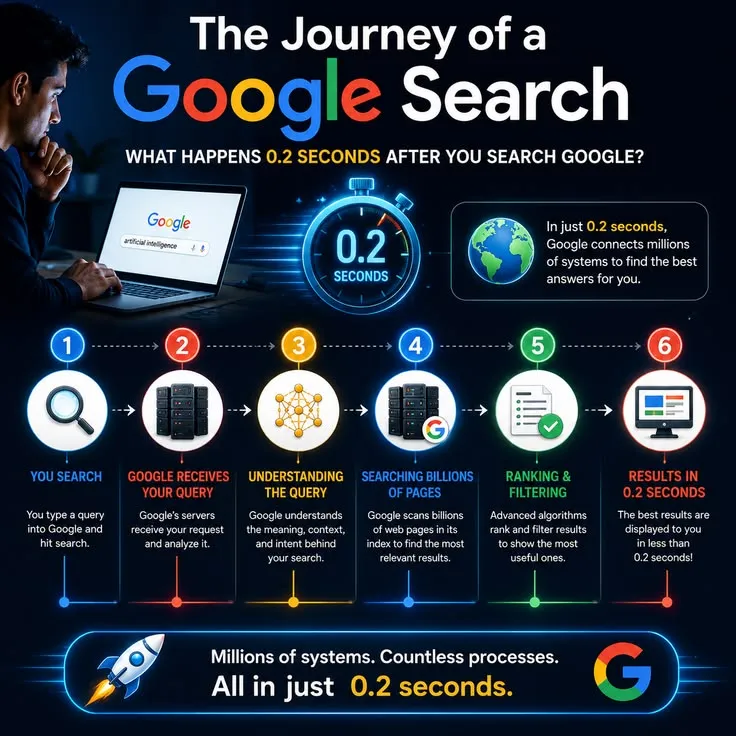
After understanding and indexing information, search engines must decide which pages should appear first. This process is called ranking.
Search engines use complicated algorithms that consider hundreds of factors when ranking webpages. The goal is to provide users with the most useful, trustworthy, and relevant information.
Some important ranking considerations include content quality, relevance to the search query, website experience, page speed, mobile friendliness, authority, and user satisfaction.
Search engines continuously improve their ranking systems to reduce low-quality content and provide better answers to users.
The Importance of Search Algorithms
Search algorithms are sets of rules and calculations used by search engines to evaluate webpages. These algorithms analyse large amounts of information and determine the order of search results.
Search engines regularly update their algorithms to improve accuracy and fight against practices that attempt to manipulate rankings.
For example, websites that provide valuable, original, and helpful information are more likely to perform better compared with websites that use misleading techniques or create low-quality content.
The main purpose of search algorithms is to connect users with reliable information as efficiently as possible.
How User Behaviour Influences Search Results
Search engines also consider user behaviour to improve search experiences. User interactions can provide signals about whether search results are useful.
Factors such as whether users click on results, spend time reading content, or quickly return to search results can help search engines understand content effectiveness.
However, search engines do not rely on a single factor. They use multiple signals together to evaluate the usefulness of webpages.
The focus remains on providing users with accurate, relevant, and satisfying results.
The Role of Artificial Intelligence in Search
Artificial intelligence has transformed how search engines process information. AI technologies help search engines understand complex questions, recognise patterns, and deliver more personalised results.
Modern search systems can interpret conversational queries, understand different languages, and provide answers based on context.
AI also helps search engines identify spam, detect low-quality content, and improve the overall search experience.
As technology continues to develop, artificial intelligence will play an even greater role in how people discover information online.
How Website Owners Can Help Search Engines Find Their Content
Website owners can improve the chances of their content being discovered by following good search practices.
Creating high-quality content, maintaining proper website structure, using clear navigation, improving page speed, and ensuring mobile compatibility can help search engines understand websites better.
Technical elements such as XML sitemaps, proper internal linking, and correct indexing settings also support better search engine discovery.
The goal should not only be getting higher rankings but also providing valuable information that genuinely helps users.
The Future of Search Technology
Search technology continues to evolve rapidly. Future search engines are expected to become more intelligent, conversational, and capable of understanding user needs more accurately.
Advancements in artificial intelligence, voice search, and machine learning are changing how people interact with information online.
Search engines are moving beyond simple keyword matching toward providing direct answers, deeper understanding, and more personalised experiences.
As the internet continues to grow, search technology will remain essential for organising and accessing global information.
Conclusion
Google and search engines use a complex process involving crawling, indexing, artificial intelligence, and ranking algorithms to find and organise information from the internet.
Search engines do not search the entire web instantly when a user enters a query. Instead, they rely on massive indexes created through continuous crawling and analysis of webpages.
Understanding how search technology works helps businesses, content creators, and users better navigate the digital world. By creating useful content and following good website practices, creators can improve their chances of being discovered while helping search engines deliver better information to users.
