
Leader of the Opposition Rahul Gandhi on Monday raised sharp questions about the security measures imposed in the national capital, asking why Delhi had been turned into what he described as a fortress. Speaking at a press conference ahead of a planned Congress programme, he linked the restrictions to ongoing public protests against Chief Election Commissioner Gyanesh Kumar and the Special Intensive Revision of electoral rolls. Gandhi alleged that the central government was protecting the CEC and played videos that, according to him, showed police excesses against dissenting protesters.
The remarks come against the backdrop of several days of demonstrations in Delhi. Opposition parties and various groups have been protesting the Special Intensive Revision exercise, which has led to large-scale changes in voter lists across multiple states. Critics have described the process as flawed and opaque, while the Election Commission has defended it as a necessary update of electoral rolls. Gandhi has repeatedly demanded the resignation of Gyanesh Kumar, accusing the Commission of undermining the integrity of elections.
Restrictions and the ‘Jail’ Narrative
Gandhi told reporters that people were being prevented from reaching Delhi. He claimed that trains and buses had been stopped and that the capital had been converted into a heavily secured zone. “Why is Delhi, the capital of India, in jail?” he asked, framing the measures as an attempt to suppress legitimate dissent rather than maintain public order.
Authorities in Delhi have deployed significant police forces in recent days, particularly around sensitive locations such as Jantar Mantar. Reports indicate restrictions on movement, temporary disruptions to public transport in certain areas, and preventive detentions of protesters. Opposition leaders have characterised these steps as disproportionate. The government and Delhi Police have maintained that the measures are necessary to prevent disruptions and ensure security in the national capital.
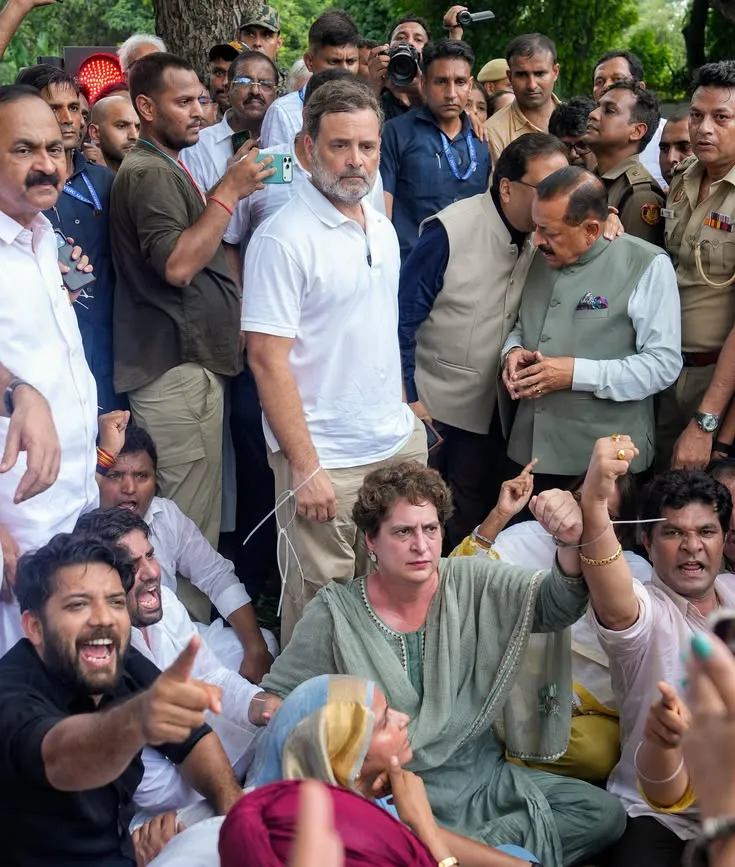
The press conference took place at a time when protests against the CEC had already led to multiple detentions. Videos circulating on social media and shown by Gandhi purported to capture instances of force used against demonstrators. These clips formed a central part of his presentation, which he used to argue that the state response had crossed acceptable limits.
Allegations Against Gyanesh Kumar and the Government
Gandhi’s criticism of Gyanesh Kumar is not new. For weeks the Leader of the Opposition has accused the Chief Election Commissioner of facilitating what he terms “vote chori” or theft of votes. He has pointed to internal differences within the Election Commission, citing reports that other Election Commissioners had raised objections to certain decisions related to the Special Intensive Revision. Gandhi has demanded that Kumar resign and has gone further by suggesting the CEC should turn approver in what he describes as a larger conspiracy.
In the latest press conference he connected the heavy security in Delhi directly to the protection of the CEC. According to Gandhi, the scale of restrictions demonstrated that the government was more concerned with shielding institutional figures than with allowing democratic expression. He reiterated earlier claims that the electoral process had been compromised and that accountability would eventually follow.
The Election Commission has consistently rejected allegations of bias or manipulation. It has described the Special Intensive Revision as a routine and necessary exercise to clean and update voter rolls. Officials have noted that differing views within the Commission form part of internal deliberation and that final decisions are taken collectively. Gyanesh Kumar has previously challenged critics to substantiate claims of electoral wrongdoing through formal legal channels.
Broader Political Context
The current confrontation reflects deeper tensions between the ruling dispensation and the opposition over the functioning of independent institutions. The Special Intensive Revision has become a flashpoint because of its scale and the number of names affected. Opposition parties argue that the process risks disenfranchising genuine voters, particularly among migrant and marginalised communities. The government and the Commission maintain that the revision strengthens the electoral system by removing inaccuracies.
Protests in Delhi have involved Members of Parliament from the INDIA bloc, student organisations and other groups. There have been instances of sit-ins, marches towards official buildings, and subsequent police action. Some opposition leaders were detained during earlier attempts to reach the Election Commission premises. These events have fuelled the narrative of restricted democratic space that Gandhi amplified on Monday.
At the same time, the right to protest exists alongside the state’s responsibility to maintain order, especially in a city that houses key constitutional institutions. Balancing these imperatives has proven contentious. Videos of alleged excesses, whether verified or contested, intensify public debate and place additional pressure on law enforcement to demonstrate restraint and accountability.
Implications for Democratic Discourse
Gandhi’s press conference underscores the opposition’s strategy of linking institutional criticism with visible street-level mobilisation. By focusing on the physical restrictions in Delhi and the treatment of protesters, he seeks to portray a broader climate of control. The repeated demand for the CEC’s resignation keeps the spotlight on the Election Commission at a time when electoral processes remain a sensitive national issue.
Whether the allegations lead to formal inquiries or institutional changes remains to be seen. The Election Commission operates under a constitutional mandate and is expected to function independently of political pressure from either side. Public confidence in the electoral system ultimately depends on transparency, consistent procedures and the ability of institutions to address legitimate concerns without appearing partisan.
As protests continue and political rhetoric sharpens, the situation in Delhi illustrates the friction that can arise when questions of electoral integrity intersect with the practical management of public demonstrations. Rahul Gandhi’s questions about a “jailed” capital and alleged protection for the Chief Election Commissioner have added a new layer to an already polarised debate. The coming days will test both the resilience of democratic spaces and the capacity of institutions to respond to criticism while upholding their core responsibilities.
Read more – brandownerdetail.com
