
Nepal’s Prime Minister Balendra Shah has publicly thanked India, China and the United States for their timely assistance following the devastating flash floods that struck the country in late August 2026. Addressing Parliament, Shah acknowledged that emergency teams and relief supplies from neighbouring and friendly nations played an important role in the initial response to a disaster that has claimed more than 1,200 lives and left thousands missing.
The Scale of the Disaster
The flash floods originated in the upper reaches of the Bhotekoshi River system near the Nepal-China border. Triggered by an ice-rock avalanche or glacial event high in the Himalayas, the surge of water, mud and debris swept through valleys and settlements. Multiple districts suffered extensive damage, with villages, roads, bridges and hydropower installations destroyed or severely affected.
Casualty figures continued to rise in the days after the event as rescue teams recovered more bodies. By early September, official tallies placed the death toll above 1,200, with more than 4,000 people still unaccounted for. Among the missing were foreign nationals, including Indian pilgrims and tourists. The human and economic toll has been severe, affecting both local communities and critical infrastructure.
International Response and Timely Support
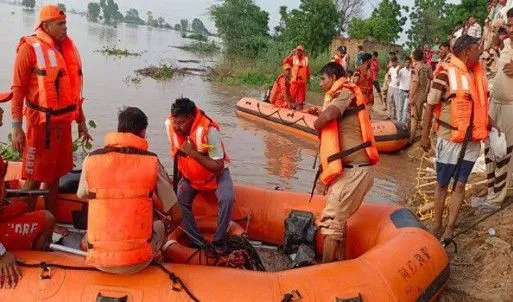
India and China were among the first countries to mobilise assistance. Both neighbours dispatched relief materials and specialised personnel in the immediate aftermath. Indian aircraft delivered multiple tranches of supplies, including medicines, shelter materials and other essentials, along with rescue teams equipped for difficult terrain. Chinese teams also contributed technical expertise and equipment, including support for reconnaissance and access to hard-hit areas.
In his parliamentary address, Shah specifically recognised the contribution of these neighbouring countries. He noted that emergency assistance teams and relief supplies had helped Nepal manage the early phase of the crisis. He also extended thanks to the United States and a wider group of nations that offered solidarity and material support. Messages of goodwill and practical aid, he said, provided encouragement at a difficult time.
Details of Assistance
Indian support included successive air shipments coordinated through the Indian Air Force and diplomatic channels. These consignments carried blankets, tarpaulins, hygiene kits, medicines and specialised rescue equipment. Teams on the ground assisted with search operations and the assessment of damage. Chinese assistance similarly focused on rapid deployment of personnel and technical resources suited to the mountainous environment.
Other countries, including several in South Asia, the Gulf, Europe and East Asia, also contributed relief supplies or offered specialised help. Shah told Parliament that Nepal had received support from a broad range of partners and expected further assistance as the focus shifted from immediate rescue to recovery and rehabilitation.
Government Assessment and Climate Context
While expressing gratitude for the international response, Shah also placed the disaster in a wider context. He referred to expert assessments linking the flash flood to an ice-rock avalanche in the high Himalayas and described the event as an illustration of the growing risks faced by mountain communities. He emphasised that climate change carries a global dimension and that the responsibility for managing its effects is shared.
The Prime Minister’s remarks combined appreciation for concrete help already received with a call for continued international engagement. Rescue operations remained under way at the time of his address, with security forces and foreign teams still working to reach remote locations and recover those still missing.
Ongoing Challenges
A week after the floods, large numbers of people remained unaccounted for and many areas continued to face access difficulties. Hydropower sites, where workers had been trapped or affected, formed a particular focus of search efforts. Temporary bridges, heavy machinery and aerial support were deployed to overcome blocked roads and unstable terrain.
The destruction of infrastructure has complicated both relief delivery and longer-term recovery planning. Restoring connectivity, providing shelter and addressing the needs of displaced families will require sustained resources. Shah indicated that Nepal would continue to coordinate with international partners as the situation evolved.
Regional Solidarity in a Difficult Moment
The prompt response from India and China underscored the practical importance of neighbourhood cooperation during natural disasters. Geographic proximity allowed both countries to move teams and supplies quickly into the affected zones. Their early involvement, alongside contributions from other nations, helped Nepal begin the difficult work of rescue and relief while the full scale of the catastrophe was still becoming clear.
Shah’s parliamentary statement served as a formal acknowledgement of that support. By naming India, China, the United States and other friendly countries, he recognised both the material assistance and the messages of solidarity that reached Kathmandu in the days after the floods. As rescue and recovery efforts continue, the cooperation demonstrated in the immediate aftermath remains a significant element of the international response to one of the most severe disasters to strike the region in recent years.
Read more – thenumberinfo.com
