
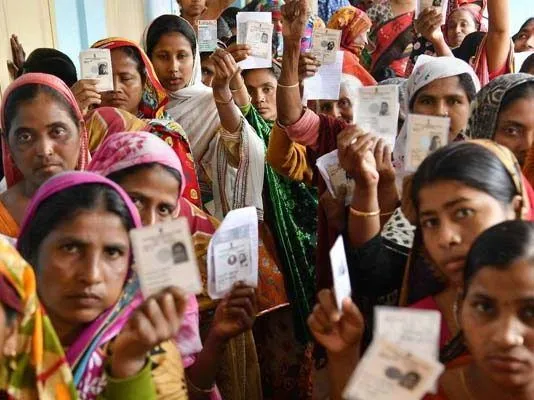
BJP Voter Deletion Pattern in Jharkhand GoddaIn the weeks since Jharkhand published its draft electoral roll on August 5 under the Special Intensive Revision process, a recurring pattern has drawn the attention of local election officials in Godda district. Booth Level Agents of the BJP have been submitting stacks of Form 7 applications seeking the deletion of names from the draft list. In several booths, the large majority of the names targeted belong to members of the minority community. The way these forms were presented, and the response of the officers on the ground, has opened a window into how the claims-and-objections stage is unfolding in practice.
The Pattern Observed in Godda Booths
Across at least four booths in the Basantrai block of Godda, Booth Level Officers reported receiving multiple Form 7s from BJP agents. The names listed included Abdul Mannan Khan, Mohammad Naushad, Mohammad Shafiq, Bibi Basilan, Mohammad Aslam and many others. In Booth No. 9 of Maheshtikri village, one BJP Booth Level Agent submitted 25 such forms. Neighbouring booths saw similar bulk submissions.
One agent arrived with approximately 75 forms. When the Booth Level Officer began asking questions about the documents, the agent, by his own later account, burned the entire set on the spot. Officers noted that some of the forms did not match the official format issued by the block office. In more than one location, almost every name flagged for deletion belonged to Muslim voters.
Villagers whose names appeared on the forms later approached the Block Development Office to register complaints. Several of them stated that their families had lived in the area for generations and that their names had figured in earlier electoral rolls, including the intensive revision of 2003.
How Local Officers Responded
The Booth Level Officers, who are state government employees, raised objections. Some accepted an initial batch of forms and then declined further ones after instructions from the Block Development Officer. The BDO, acting as the Electoral Registration Officer for the area, confirmed that complaints had been received from Maheshtikri, Pachua Kita, Lochni and Baghakol. He directed that the forms should not be acted upon immediately because their source and authenticity required verification. A ground report was to be prepared.
The officers’ caution stemmed from two concerns: the bulk nature of the submissions and the apparent concentration of names from one community. Under the rules, any citizen or agent can file a Form 7 objecting to the inclusion of a name. The form itself does not demand supporting evidence at the time of filing. The safeguard lies in the subsequent process. The Electoral Registration Officer is required to issue notice, allow time for a response, conduct a hearing and order a field verification by the Booth Level Officer before any deletion is finalised.
The Official Position on Procedure
Jharkhand’s Chief Electoral Officer stated that Form 7 applications can be submitted in bulk and that a Booth Level Officer cannot refuse to accept them. He emphasised that every objection must still pass through the prescribed inquiry. Deletion does not occur automatically upon filing. The BJP maintained that its agents were exercising their legitimate right to point out names they believed should not remain on the roll.
This procedural clarity is important. The Special Intensive Revision is intended to clean the electoral rolls of duplicates, deceased electors, permanently shifted voters and those who cannot be traced. The draft published on August 5 had already removed a substantial percentage of names statewide under these categories. The claims-and-objections window that followed is the stage at which both inclusions and further deletions can be proposed.
Fears on the Ground
For the voters whose names were flagged, the process has generated anxiety. Several residents told local officials they feared not only the loss of voting rights but also potential difficulties in accessing government schemes linked to electoral identity. Older residents stressed their long-standing presence in the village and the continuity of their names across previous rolls. The 2003 intensive revision is often cited because names verified then are generally treated as having a stronger claim to inclusion in subsequent exercises.
The Block Development Officer has indicated that verification will be carried out. Until that process is complete, the status of the contested names remains open. The claims-and-objections period itself has a defined closing date, after which the final roll will be prepared on the basis of the inquiries conducted.
Broader Context of the Revision
Jharkhand’s Special Intensive Revision is part of a nationwide effort by the Election Commission to update electoral rolls. The exercise involves door-to-door enumeration followed by a draft publication and a period for corrections. Political parties appoint Booth Level Agents precisely so that they can scrutinise the draft and file claims or objections. In that sense, the appearance of Form 7s is not unusual.
What local officers in Godda found striking was the volume of forms from individual agents, the similarity of the names being objected to, and, in one case, the destruction of the forms when questions were asked. These details prompted the officers to escalate the matter rather than process the applications in the ordinary course.
What Happens Next
Every Form 7 that has been formally received must still go through notice, hearing and field verification. Applications that were never accepted or that were destroyed cannot form the basis of any deletion. The Electoral Registration Officer’s report after ground verification will determine whether the remaining objections have substance.
The episode in Godda illustrates both the openness of the claims-and-objections process and the practical difficulties that arise when bulk filings are concentrated in particular booths and communities. For the voters concerned, the coming weeks of verification will decide whether their names remain on the roll. For the election machinery, the episode is a reminder that the integrity of the final list depends on careful, case-by-case scrutiny rather than the volume of forms submitted at the first stage.
The pattern noticed by the Booth Level Officers has now been placed on record. How the subsequent inquiry is conducted will determine whether the objections lead to any actual deletions or are set aside after examination of the facts on the ground.
Read more – therecipetaste.com , uuploadarticle.com
