
On the occasion of what would have been Asha Bhosle’s 93rd birth anniversary, singer and composer Adnan Sami has shared warm recollections of his long association with the legendary playback singer. In a conversation reflecting on her influence, Sami recalled two remarks from Bhosle that have stayed with him: that he understood her voice better than anyone after R.D. Burman, and that Burman himself would have been pleased to see his progress.
Bhosle, who passed away earlier in 2026 at the age of 92, remains one of the most versatile and prolific voices in Indian film music. Her partnership with composer R.D. Burman, often called Pancham, produced some of the most distinctive and enduring songs of Hindi cinema. Sami’s comments place that partnership at the centre of his own musical journey.
A Remark That Stayed With Him
Sami has recounted a moment after they recorded the song “Kabhi To Nazar Milao” in London. As he dropped Bhosle at Heathrow Airport, just before she headed to the immigration counter, she told him that if anyone had understood her voice after Pancham, it was him. The compliment carried particular weight because it came from an artist who had worked with virtually every major composer of her era and whose vocal identity was shaped in significant measure by her collaboration with Burman.
On another occasion, Bhosle told Sami that if Pancham were alive, he would have been very happy to see him. Sami has said the words remain close to his heart, especially because Burman had been encouraging toward him even in his childhood years.
Early Connection to the Burman Sound
Sami’s fascination with the Burman name began long before he entered the professional music world. As a child living in Portugal in the 1970s, where his father was posted, he developed an early attachment to Indian film music. He has described how the credit “Burman” on a song was enough to hold his attention, at an age when he did not yet distinguish clearly between S.D. Burman and R.D. Burman. The combination of R.D. Burman’s compositions and Asha Bhosle’s voice became a lasting reference point.
That early exposure later translated into a personal and professional relationship. Sami has spoken of meeting Bhosle and Burman during visits to India, playing his own compositions for them, and receiving both scrutiny and encouragement. Bhosle predicted he would become a good composer. Those interactions helped shape his decision to pursue music seriously and, eventually, to build a career in India.
Collaboration and Career Influence
Sami has repeatedly credited Bhosle with playing an important role in his entry into the Indian music scene. He has said he tried his luck in India in significant measure because of her insistence and support. Their collaboration produced memorable work, including the popular “Kabhi To Nazar Milao.” Over the years he also worked with her on other film songs, continuing a creative association that began with deep respect for her artistry.
For Sami, the Asha–R.D. Burman partnership represented a standard of musical understanding—how a composer can write for a specific voice and how a singer can inhabit a composition so completely that the two become inseparable in the listener’s memory. Being told that he had grasped something of that understanding after Burman was, for him, both an honour and a responsibility.
The Larger Legacy of Asha and Pancham
Asha Bhosle’s career spanned more than seven decades and thousands of songs across languages and genres. While she worked with many composers, her collaboration with R.D. Burman occupies a special place. Together they created a sound that was playful, modern, emotionally direct and often daring for its time. Songs from that partnership continue to define an era of Hindi film music for successive generations.
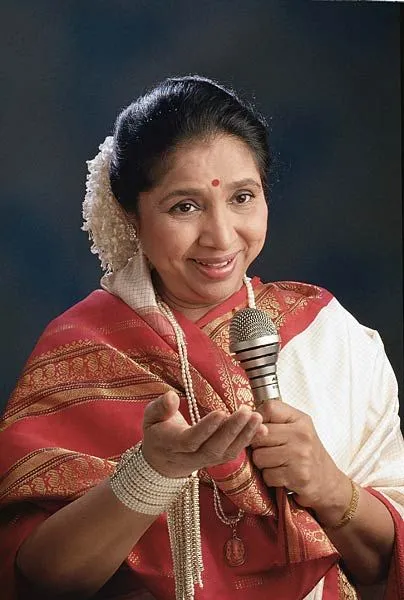
Sami’s recollections underline how that body of work served as both inspiration and benchmark for later musicians. By invoking Burman’s hypothetical approval and Bhosle’s own assessment of his sensitivity to her voice, Sami situates his career within a lineage rather than as an isolated success.
Remembering on Her Birth Anniversary
Marking the day she would have turned 93, Sami’s comments serve as a personal tribute. He has spoken of missing her and of recognising how much of his three-decade-plus career he owes to her encouragement and example. The anecdotes he shared—airport conversations, childhood admiration, studio collaborations—add human detail to a relationship that was both professional and deeply respectful.
In recalling Bhosle’s words about understanding her voice after Pancham, Sami highlights a quality that distinguished her greatest interpreters: the ability to hear not only the notes but the character, humour, longing and energy she brought to a song. That she felt he had done so remains, for him, one of the most meaningful acknowledgments of his work.
The conversation around Asha Bhosle’s birth anniversary thus returns, through Sami’s memories, to the partnership that shaped so much of her legacy and to the continuing influence of that music on artists who grew up listening to it. The simple statements she once made to him—about Pancham’s likely happiness and about his own grasp of her voice—now stand as a quiet measure of the standard she set and the regard in which she held those who met it.
Read more – tastymenuideas.com
