
The brain is one of the most important organs in the human body, controlling thoughts, emotions, learning ability, memory, and everyday decision-making. Just like the rest of the body, the brain requires proper nutrition to function effectively. A balanced diet containing essential nutrients can support brain performance, improve concentration, and help maintain cognitive health as we age.
Although no single food can instantly increase intelligence or prevent all memory-related problems, research suggests that certain foods contain nutrients that support brain structure, protect brain cells, and improve communication between neurons. Nutrients such as omega-3 fatty acids, antioxidants, vitamins, minerals, and healthy fats play an important role in maintaining brain health.
Including brain-friendly foods in your daily diet can support better focus, improved memory function, and overall mental well-being. This article explores the best foods that can naturally support brain health and help boost memory power.
Why Nutrition Is Important for Brain Health
The brain requires a continuous supply of energy and nutrients to perform its complex functions. Although it represents only a small percentage of body weight, it uses a significant amount of the body’s energy.
A nutrient-rich diet supports the brain in several ways. It helps maintain healthy brain cells, improves blood flow, supports neurotransmitter production, and protects against oxidative stress that can damage cells.
Poor dietary habits, excessive consumption of processed foods, and lack of essential nutrients may negatively affect concentration, mood, and cognitive performance over time.
Eating a variety of whole foods provides the brain with the necessary building blocks needed for optimal functioning.
Fatty Fish: A Powerful Source of Brain-Boosting Omega-3 Fatty Acids
Fatty fish are among the most recommended foods for supporting brain health because they are rich in omega-3 fatty acids, especially DHA (docosahexaenoic acid). DHA is an important component of brain cell membranes and plays a role in maintaining normal brain function.
Fish such as salmon, sardines, mackerel, tuna, and trout provide healthy fats that support communication between brain cells.
Omega-3 fatty acids are also associated with supporting memory, learning ability, and overall cognitive function. Including fish regularly as part of a balanced diet can contribute to long-term brain wellness.
For people who do not eat fish, plant-based sources of omega-3 fats, such as flaxseeds and walnuts, can also be considered.
Blueberries: Antioxidant-Rich Food for Better Memory
Blueberries are often considered a brain-friendly fruit because they contain high levels of antioxidants and plant compounds called flavonoids.
Antioxidants help protect cells from oxidative stress caused by harmful molecules called free radicals. Since the brain uses a large amount of oxygen, it is particularly sensitive to oxidative damage.
The natural compounds found in blueberries may support communication between brain cells and help maintain cognitive function.
Adding blueberries to breakfast, smoothies, or snacks is an easy way to include beneficial nutrients in the daily diet.
Nuts and Seeds: Small Foods With Big Brain Benefits
Nuts and seeds provide a combination of healthy fats, antioxidants, vitamins, and minerals that support brain function.
Walnuts are especially recognized for their omega-3 fatty acid content. They also contain antioxidants that may help protect brain cells.
Other beneficial choices include almonds, pumpkin seeds, sunflower seeds, and chia seeds. These foods provide nutrients such as vitamin E, magnesium, and zinc, which are important for maintaining healthy brain activity.
A small portion of nuts and seeds as a daily snack can support overall nutrition and contribute to better cognitive health.
Eggs: A Natural Source of Brain-Supporting Nutrients
Eggs contain several nutrients that are beneficial for brain function. One important nutrient found in eggs is choline, which plays a role in producing acetylcholine, a neurotransmitter involved in memory and learning.
Eggs also provide high-quality protein and important vitamins that support overall health.
Including eggs as part of a balanced diet can provide essential nutrients needed for brain processes, especially for people who require nutrient-rich food options.
Leafy Green Vegetables: Protecting Brain Function With Essential Nutrients
Green leafy vegetables such as spinach, kale, broccoli, and other greens are rich in vitamins, minerals, and antioxidants.
These vegetables contain nutrients such as vitamin K, folate, and plant compounds that support brain health.
Folate is involved in important processes related to brain function, while antioxidants help protect cells from damage.
Regular consumption of leafy greens is often associated with healthier eating patterns that support both physical and mental wellness.
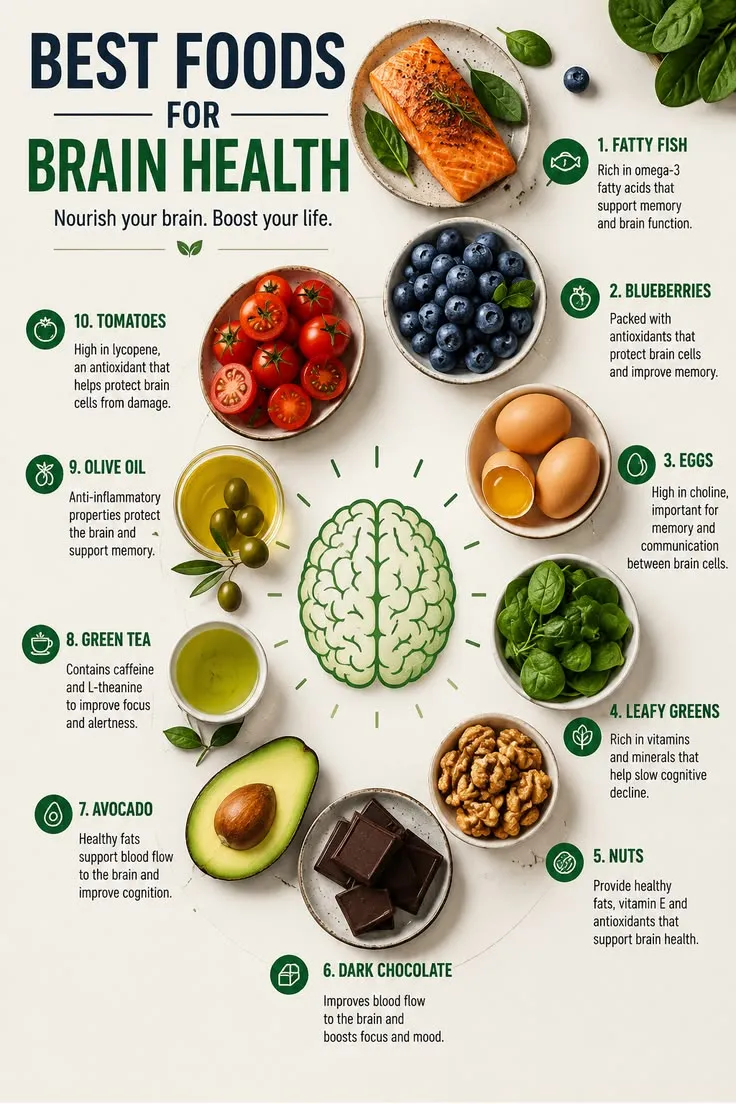
Dark Chocolate: A Brain-Friendly Treat When Consumed Moderately
Dark chocolate with a high cocoa content contains flavonoids, antioxidants, and minerals that may support brain health.
Cocoa compounds can influence blood flow, which is important for delivering oxygen and nutrients to the brain. Improved circulation may support concentration and mental performance.
However, moderation is important because many chocolate products contain added sugar and unhealthy ingredients. Choosing quality dark chocolate and consuming it in reasonable amounts can make it a healthier option.
Avocados: Healthy Fats for Better Brain Function
Avocados are rich in monounsaturated fats, which support healthy blood circulation. Since the brain depends on proper blood flow for receiving oxygen and nutrients, healthy fats can play an important role in maintaining cognitive function.
Avocados also contain vitamins and minerals, including potassium and vitamin E, which contribute to overall health.
Adding avocado to salads, meals, or spreads can provide valuable nutrients that support brain wellness.
Whole Grains: Providing Long-Lasting Energy for the Brain
The brain requires a steady supply of energy to function efficiently. Whole grains provide complex carbohydrates that release energy gradually, helping maintain stable blood sugar levels.
Foods such as oats, brown rice, whole wheat, quinoa, and barley can support consistent energy availability for the brain.
Stable energy levels may help improve concentration and reduce mental fatigue during daily activities.
Green Tea: Supporting Focus and Mental Alertness
Green tea contains natural compounds such as caffeine and L-theanine, which may support alertness and concentration.
While caffeine can improve attention temporarily, L-theanine promotes relaxation without causing excessive drowsiness. Together, these compounds may support a balanced state of focus.
Green tea also contains antioxidants that contribute to overall health.
Berries and Colorful Fruits: Natural Protection for Brain Cells
Apart from blueberries, other colorful fruits such as strawberries, oranges, grapes, and pomegranates contain beneficial plant compounds.
The antioxidants and vitamins present in these fruits help support the body’s defense system and protect cells from damage.
A diet rich in different fruits provides a variety of nutrients that contribute to overall brain and body health.
Foods to Limit for Better Brain Health
While adding brain-supporting foods is important, reducing unhealthy dietary habits is equally valuable.
Excessive intake of highly processed foods, sugary drinks, trans fats, and refined carbohydrates may negatively affect overall health.
A balanced diet that focuses on whole foods, vegetables, fruits, lean proteins, and healthy fats is generally considered more supportive of long-term cognitive health.
Lifestyle Habits That Work Alongside Brain-Friendly Foods
Nutrition is only one part of maintaining brain health. Other lifestyle habits also contribute to memory and cognitive performance.
Regular physical activity improves blood circulation and supports brain function. Quality sleep helps the brain process information and maintain memory. Mental activities such as reading, learning new skills, and solving problems can also support cognitive abilities.
Managing stress through relaxation techniques, social connections, and healthy routines can further contribute to overall brain wellness.
Conclusion
A healthy brain depends on consistent care, and nutrition plays an important role in supporting memory, focus, and cognitive performance. Foods rich in omega-3 fatty acids, antioxidants, vitamins, minerals, and healthy fats can provide essential nutrients that support brain function.
Fatty fish, blueberries, nuts, seeds, eggs, leafy greens, whole grains, avocados, and other nutrient-rich foods can become valuable parts of a balanced diet.
While food alone cannot guarantee perfect memory or prevent all brain-related conditions, making healthier dietary choices can contribute to better mental performance and long-term brain health. Combining nutritious foods with regular exercise, quality sleep, and an active lifestyle creates a strong foundation for keeping the brain healthy throughout life.
