
Pakistan has issued a clear warning that continued Houthi attacks on Saudi Arabia could activate a newly signed collective defence agreement, raising the stakes in an already volatile regional conflict. Defence Minister Khawaja Asif stated that any unprovoked aggression or spillover of the Yemen conflict into Saudi territory would operationalise the Makkah Joint Defense Agreement, a tripartite pact linking Pakistan, Saudi Arabia and Turkey. The remarks underline Islamabad’s formal commitment to treat an attack on one member as an attack on all three.
The Makkah Joint Defense Agreement
The agreement was signed on 7 August 2026 in the holy city of Mecca by the leaders of Saudi Arabia, Pakistan and Turkey. Its central provision establishes a collective defence framework: an armed attack against any one of the three states is to be regarded as an attack against all. Officials from the signatory countries have described the pact as defensive in character, designed to strengthen deterrence and mutual security rather than to enable offensive operations against third parties.
The arrangement builds on an earlier bilateral strategic mutual defence understanding between Saudi Arabia and Pakistan. By bringing Turkey into the framework, the three countries have created a formal mechanism for coordinated responses to external threats. While the full operational details of how the pact would function in practice have not been exhaustively detailed in public, the principle of collective response is unambiguous.
Context of the Houthi Attacks
The Pakistani warning followed a wave of drone and missile strikes by Yemen’s Houthi forces on southern Saudi Arabia. The attacks targeted civilian areas and energy infrastructure in cities including Abha, Khamis Mushait, Jazan and Najran, resulting in dozens of civilian injuries. Saudi authorities described the strikes as a dangerous escalation and affirmed their right to take necessary measures to protect territory, citizens and critical infrastructure.
The Houthis, who control significant parts of northern Yemen and maintain close ties with Iran, have a history of cross-border attacks on Saudi targets. These latest strikes occurred against the backdrop of heightened regional tensions, including broader confrontations involving Iran and the United States. Pakistan has characterised the Houthis as a non-state actor and cautioned against any attempt to expand the Yemen conflict into Saudi territory.
Pakistan’s Position and Commitments
Speaking on national television, Defence Minister Khawaja Asif left little room for ambiguity. He stated that under the trilateral agreement, aggression against any of the three members is regarded as aggression against all. Unprovoked attacks or a spillover of the Yemen conflict into Saudi Arabia would, in his words, “definitely” make the agreement operational. Pakistan, he emphasised, is bound by the terms of the pact and will honour its obligations should the need arise.
At the same time, Asif expressed hope that the situation would be brought under control and de-escalate. Pakistani officials have also stressed that the agreement is not an instrument for initiating aggression. Subsequent statements from the foreign ministry clarified that no specific military response under the pact was under active discussion at that moment, while reaffirming that Pakistan would act in accordance with the agreement when circumstances required.
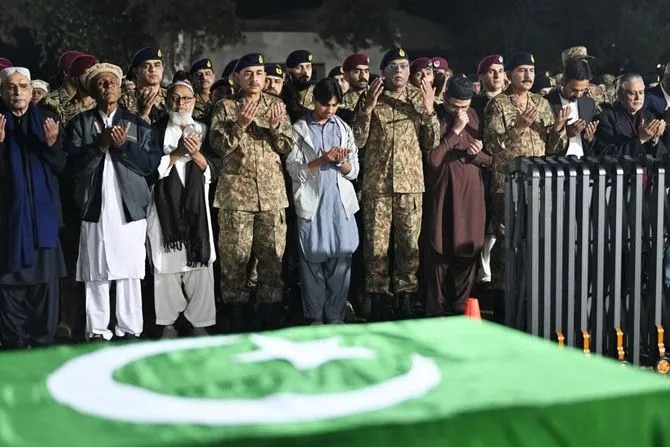
Pakistan has publicly condemned the Houthi attacks and reiterated its support for Saudi Arabia’s sovereignty, security and territorial integrity. Islamabad has also been engaged in diplomatic efforts related to wider regional tensions, including mediation efforts involving the United States and Iran, and has urged restraint on all sides.
Regional and Strategic Implications
The activation of a collective defence clause involving three significant Muslim-majority states would represent a notable development in Middle Eastern and broader Islamic-world security architecture. For Saudi Arabia, the pact offers an additional layer of formal political and potential military backing beyond existing bilateral arrangements. For Pakistan, it extends longstanding security ties with the Kingdom into a multilateral framework that also includes Turkey.
The involvement of Turkey adds a further dimension. Ankara brings its own military capabilities, defence industry strengths and regional influence. Together, the three countries possess substantial conventional forces, though translating a political commitment into coordinated military action would still require detailed planning, logistics and political consensus among the partners.
Observers note that the pact’s practical effectiveness will depend on how its members interpret the threshold for activation and what forms of assistance—diplomatic, logistical, intelligence or direct military—would be provided. Historical experience with other regional security frameworks suggests that collective defence commitments can face challenges when threat perceptions or national interests diverge.
Broader Middle East Dynamics
The Houthi attacks and Pakistan’s response occur within a complex web of regional rivalries and proxy conflicts. Iran’s support for the Houthis has long been a point of contention with Saudi Arabia and its partners. Any expansion of the Yemen conflict risks drawing in additional actors and complicating ongoing diplomatic efforts to manage tensions between Iran and the United States.
Pakistan occupies a distinctive position. It maintains historically close relations with Saudi Arabia, has sought to balance ties with Iran, and has positioned itself as a potential mediator in wider confrontations. Its public affirmation of the Makkah pact’s collective defence principle signals that attacks on Saudi territory will not be viewed as a purely bilateral Saudi-Yemeni or Saudi-Iranian matter.
What Activation Could Mean
Should the pact be formally invoked, the range of possible responses remains deliberately flexible. Collective defence agreements typically allow members discretion in determining the nature and scale of their contribution. Options could range from diplomatic and political solidarity to intelligence sharing, logistical support, defensive deployments or more direct military measures. Pakistani officials have not outlined specific scenarios, consistent with the position that action would be considered if and when the situation demands it.
The emphasis on the defensive character of the agreement is significant. By framing the pact as a response mechanism rather than an offensive alliance, the signatories aim to present it as a stabilising rather than escalatory instrument. Whether that framing holds under pressure will depend on the intensity of any future attacks and the political calculations of the three governments.
Looking Ahead
The immediate priority for all parties remains de-escalation. Pakistan has expressed the hope that the current wave of attacks will subside and that international pressure will contribute to calming the situation. Saudi Arabia continues to assert its right of self-defence while managing the consequences of the strikes on its territory and infrastructure.
The Makkah Joint Defense Agreement has moved from a newly signed political document to a live reference point in an active conflict. Pakistan’s explicit statements have removed any uncertainty about its interpretation of the pact’s core obligation. An attack on Saudi Arabia, in the view of Islamabad’s defence leadership, engages the collective commitments of all three signatories.
How those commitments would be implemented in practice remains a question for the future. For now, the warning itself serves as a signal: the Yemen conflict’s spillover into Saudi territory carries implications that extend beyond the two countries directly involved, and Pakistan stands prepared to honour the defence framework it has entered with Riyadh and Ankara.
Read more – simplemarathiukhane.com
