
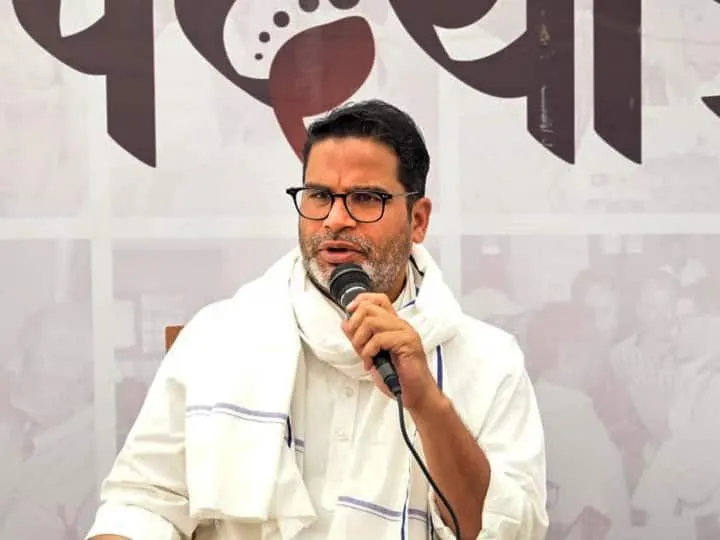
Prashant Kishor’s victory in the Bankipur Assembly bypoll has delivered a rare jolt to the Bharatiya Janata Party in one of its longest-held urban strongholds in Bihar. Yet the result carries a more complex message for the state’s principal Opposition force, the Rashtriya Janata Dal. While Opposition leaders have publicly welcomed the BJP’s defeat, the sharp decline in RJD votes has raised internal concerns that a section of the party’s traditional support base moved towards Kishor’s Jan Suraaj Party.
The bypoll, held after the seat fell vacant when BJP national president Nitin Nabin moved to the Rajya Sabha, saw Kishor secure his first electoral win and give Jan Suraaj its first seat in the Bihar Assembly. Kishor polled over 64,000 votes and defeated the BJP candidate by a margin of more than 19,000 votes. The RJD nominee finished a distant third with around 14,000 votes.
Dramatic Shift from the 2025 Assembly Election
The numbers underscore how quickly voter preferences changed. In the 2025 Bihar Assembly election on the same seat, the BJP had won with more than 98,000 votes. The RJD candidate had secured over 46,000 votes, while Jan Suraaj managed just over 7,000. Within less than a year, the RJD’s tally collapsed and Kishor emerged as the clear alternative to the ruling party.
Bankipur is an upper-caste-dominated urban constituency in Patna that has remained with the BJP continuously since 1995. It also contains a sizeable population of Yadavs and Muslims, communities that form the core of the RJD’s social coalition. The steep drop in the RJD’s vote share has fuelled the assessment that a section of these voters backed Kishor, viewing him as the stronger candidate capable of defeating the BJP.
Why the Result Troubles the RJD More Than the BJP
For the BJP, the loss is embarrassing. The party treated the contest as a prestige battle and deployed significant organisational resources. Losing a seat long considered impregnable, especially one associated with its national president, raises questions about its ability to retain traditional urban support under the current state leadership. Yet the BJP remains the dominant ruling force in Bihar. A single bypoll defeat, while damaging to perception, does not alter the broader balance of power in the Assembly.
The RJD faces a different challenge. After the 2025 elections, in which the party’s seat tally fell sharply, finishing third in Bankipur adds to worries about its trajectory. Political observers note that Muslim and Yadav voters, whose primary electoral objective has often been to defeat the BJP, appear to have recalibrated. When a credible non-BJP challenger emerged, some of these voters shifted away from the RJD. The result suggests that Jan Suraaj is beginning to occupy space that the RJD had long claimed as the principal Opposition force.
This pattern is not entirely new. In the 2025 Assembly polls, Jan Suraaj, despite winning no seats, polled enough votes in multiple constituencies to influence margins and affect outcomes for both the ruling alliance and the Opposition. The Bankipur verdict indicates that the party can now convert that spoiler role into outright victories when conditions favour consolidation of anti-BJP votes.
Kishor’s Positioning and Rejection of Alliances
Kishor has framed the victory as a mandate for change focused on education, employment and governance. He has ruled out joining any political alliance, stating that Jan Suraaj’s alliance is with the people of Bihar. He has also claimed support from voters and workers dissatisfied with the BJP, Congress and RJD alike. This independent stance positions his party as a potential third force rather than a junior partner in existing coalitions.
The low voter turnout of around 34 per cent adds another layer. In a contest with reduced participation, the ability to mobilise specific sections of the electorate becomes decisive. Kishor’s intensive ground campaign and focus on younger voters appear to have paid off in an urban seat with a significant youth population.
Broader Implications for Bihar Politics
The Bankipur outcome reinforces the perception that even long-held BJP strongholds can become vulnerable when local dissatisfaction combines with a determined challenger. For the Opposition, it offers encouragement that the ruling party is not invincible. At the same time, it highlights the risk that anti-BJP sentiment may not automatically translate into support for the RJD.
If a section of the traditional Muslim-Yadav base continues to view alternative platforms as more effective vehicles for defeating the BJP, the RJD will face pressure to rebuild its organisational strength and reconnect with its core constituencies. The party’s reduced vote share in a seat where it once performed competitively signals that its claim to be the natural home for anti-BJP voters is no longer uncontested.
For Jan Suraaj, the win provides much-needed electoral legitimacy after a complete washout in the 2025 Assembly elections. It transforms Kishor from a strategist and campaigner into an elected representative and gives the party a foothold in the Bihar Assembly. How the party builds on this breakthrough—whether through sustained organisational work or further independent contests—will determine whether Bankipur remains an isolated success or the start of a broader realignment.
A Warning Signal Rather Than a Final Verdict
One bypoll does not redefine Bihar’s political landscape. The BJP retains substantial organisational machinery and the advantages of incumbency. The RJD still commands a significant social base across large parts of the state. Yet the Bankipur result serves as a clear warning. For the BJP, it exposes vulnerabilities in urban bastions. For the RJD, it raises the more uncomfortable possibility that its core voters are willing to look elsewhere when they perceive a stronger option to challenge the ruling party.
The coming months will test whether the RJD can stem any further erosion and whether Jan Suraaj can expand beyond a single high-profile win. In the meantime, the Bankipur verdict has complicated the Opposition’s calculations even as it celebrates the BJP’s defeat. The real contest for the space of principal challenger in Bihar politics has become more open than it appeared only months ago.
Read more – situsmerahtoto.info
