
A parliamentary standing committee has recommended that India prioritise the launch of a dedicated geostationary satellite for continuous monitoring of forest fires in the Himalayan region. The panel also called for a National pine-needle utilisation policy to reduce one of the major fuel sources of these fires through organised collection and economic incentives.
The recommendations form part of a detailed report titled “Forest fires in the Himalayan Region, its adverse effects and mitigation measures,” which was tabled in both Houses of Parliament on Friday. The Department-related Parliamentary Standing Committee on Science and Technology, Environment, Forest and Climate Change, headed by BJP MP Medha Kulkarni, examined the causes, impacts, monitoring systems and mitigation strategies related to forest fires across the Western and Eastern Himalaya.
Why the Himalayan Region Needs Special Attention
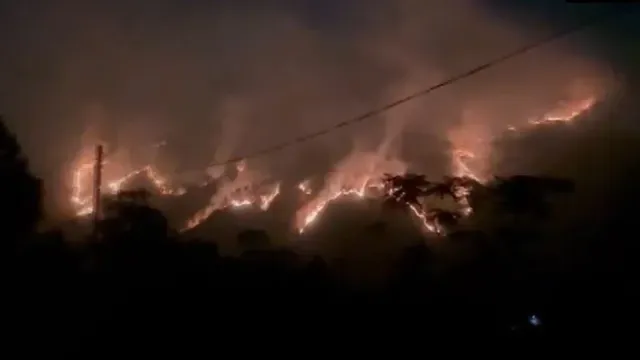
The committee noted that the Western and Eastern Himalayan states together constitute only about 17 per cent of India’s landmass yet account for 57 per cent of the country’s forest fire incidents. This disproportionate share underlines the ecological vulnerability of the mountain forests and the need for region-specific solutions.
Forest fires in these areas cause extensive damage to biodiversity, soil quality, water sources and local livelihoods. The panel flagged significant gaps in monitoring, regulation and on-ground management that currently limit the effectiveness of prevention and response efforts.
Critical Gap in Satellite Monitoring
One of the committee’s strongest observations concerns India’s continued dependence on foreign satellites for active fire detection. The Forest Survey of India currently generates forest fire alerts using data from the polar-orbiting AQUA and Suomi-NPP satellites. These platforms observe Indian territory only about eight times a day, leaving long periods without coverage.
The central government itself has described this limitation as a “critical observational gap in the diurnal fire monitoring cycle.” The parliamentary panel expressed concern that, despite India’s established leadership in space technology, the country still relies on external systems for a core environmental monitoring function.
In response, the committee urged the Department of Space to prioritise the development and launch of a geostationary satellite capable of providing round-the-clock monitoring of forest fires. A geostationary platform would remain fixed relative to the Earth and enable continuous observation of high-risk zones, allowing earlier detection and faster dissemination of alerts to state forest departments and disaster response agencies.
National Pine-Needle Utilisation Policy
Dry pine needles, particularly from chir pine forests, form a highly flammable layer on the forest floor and are widely recognised as a major contributor to the rapid spread of fires in the Himalayan belt. The panel recommended the formulation of a National pine-needle utilisation policy.
Under the proposed policy, specific zones would be identified for systematic collection of pine needles. The framework would also include fiscal incentives and improved market access for collected material so that local communities and enterprises have economic reasons to clear the needles regularly. Turning a fire hazard into a usable resource—whether for biomass fuel, handicrafts or other products—could simultaneously reduce fire risk and create livelihood opportunities in hill areas.
Additional Recommendations for Stronger Response
Beyond satellite monitoring and pine-needle management, the committee made several other important suggestions. It called for a region-specific scientific study to examine whether there is an empirical link between climate change and the rising frequency of forest fires. The study should analyse long-term trends in temperature, precipitation patterns and the length of dry spells across the Himalayan states.
The panel also pressed for a time-bound decision on establishing at least two regional response centres of the National Disaster Response Force dedicated exclusively to forest-fire emergencies in the Himalayan region. Such specialised units would improve coordination and rapid deployment during peak fire seasons.
In addition, the committee advised the Centre to undertake a careful review of existing forest laws. The objective would be to strengthen protections for both forest ecosystems and the communities that depend on them, ensuring that regulatory frameworks support rather than hinder effective fire prevention and sustainable resource use.
Moving from Reactive to Proactive Management
Taken together, the recommendations reflect a shift in emphasis from purely reactive firefighting towards a more integrated system of early detection, fuel management and institutional preparedness. Continuous satellite coverage would address the current blind spots in the daily fire cycle. A national policy on pine needles would tackle one of the most persistent local fuel sources. Dedicated NDRF centres and climate-linked research would strengthen both immediate response capacity and longer-term understanding of the problem.
The Himalayan forests play a critical role in regulating water flows, supporting biodiversity and sustaining mountain communities. Repeated large-scale fires undermine these functions and impose rising economic and ecological costs. By highlighting the need for indigenous satellite capability, economic utilisation of pine needles and specialised disaster-response infrastructure, the parliamentary panel has outlined a practical roadmap for reducing the frequency and severity of forest fires in one of India’s most fire-prone regions.
Implementation will require coordinated action by the Department of Space, the Ministry of Environment, Forest and Climate Change, state forest departments and local communities. If the recommendations are acted upon with urgency, they could significantly improve India’s ability to detect, prevent and manage forest fires in the fragile Himalayan landscape.
Read more – morecai.com
