
Snacking is a regular part of most people’s daily eating patterns. When chosen carefully, snacks can support steady energy, help meet nutrient needs, and prevent excessive hunger that leads to overeating at meals. When chosen poorly, they often add excess calories, sugar, sodium, and refined carbohydrates with little nutritional value. Smart snacking focuses on nutrient-dense foods that deliver protein, fiber, healthy fats, vitamins, and minerals while keeping portions reasonable. This guide outlines practical principles and ideas for making snacks that contribute positively to overall nutrition.
Why Snacking Matters
Well-timed and well-chosen snacks can bridge the gap between meals, stabilise blood sugar, and provide nutrients that may be missing from main dishes. They are especially useful for active individuals, growing children, and anyone with long intervals between meals. The key is intentionality. Mindless eating from large packages or frequent reliance on ultra-processed items undermines these benefits. Treating snacks as small, planned opportunities for nutrition rather than automatic responses to boredom or stress produces better results.
Core Principles of Smart Snacking
Effective snacks usually combine at least two of the following: protein, fiber, and healthy fat. Protein and fiber promote satiety, helping people feel fuller for longer. Healthy fats contribute to satisfaction and support absorption of certain vitamins. Whole or minimally processed foods form the foundation because they naturally supply these nutrients along with vitamins, minerals, and beneficial plant compounds.
Portion awareness is equally important. Even nutritious foods can contribute excess calories when eaten in large quantities. Pre-portioning snacks into small containers or bags helps prevent overeating. Reading labels on packaged items allows comparison of added sugars, sodium, and ingredient quality.
Preparation reduces reliance on less healthy options. Keeping washed fruit, cut vegetables, plain yogurt, nuts, or hard-boiled eggs readily available makes the better choice the easier choice.
Nutrient-Dense Snack Categories
Fruits and vegetables supply fiber, vitamins, minerals, and water with relatively few calories. Fresh fruit, such as apples, berries, oranges, or bananas, works well alone or paired with a protein source. Raw vegetables—carrot sticks, cucumber slices, bell pepper strips, cherry tomatoes, or broccoli florets—pair effectively with hummus, yogurt-based dips, or a small amount of nut butter.
Protein-rich options include plain or low-sugar Greek yogurt, cottage cheese, a small handful of unsalted nuts or seeds, hard-boiled eggs, or a modest serving of cheese. These foods help maintain muscle and prolong fullness. Combining them with produce creates balanced mini-meals: yogurt with berries, apple slices with a spoonful of peanut butter, or vegetables with hummus.
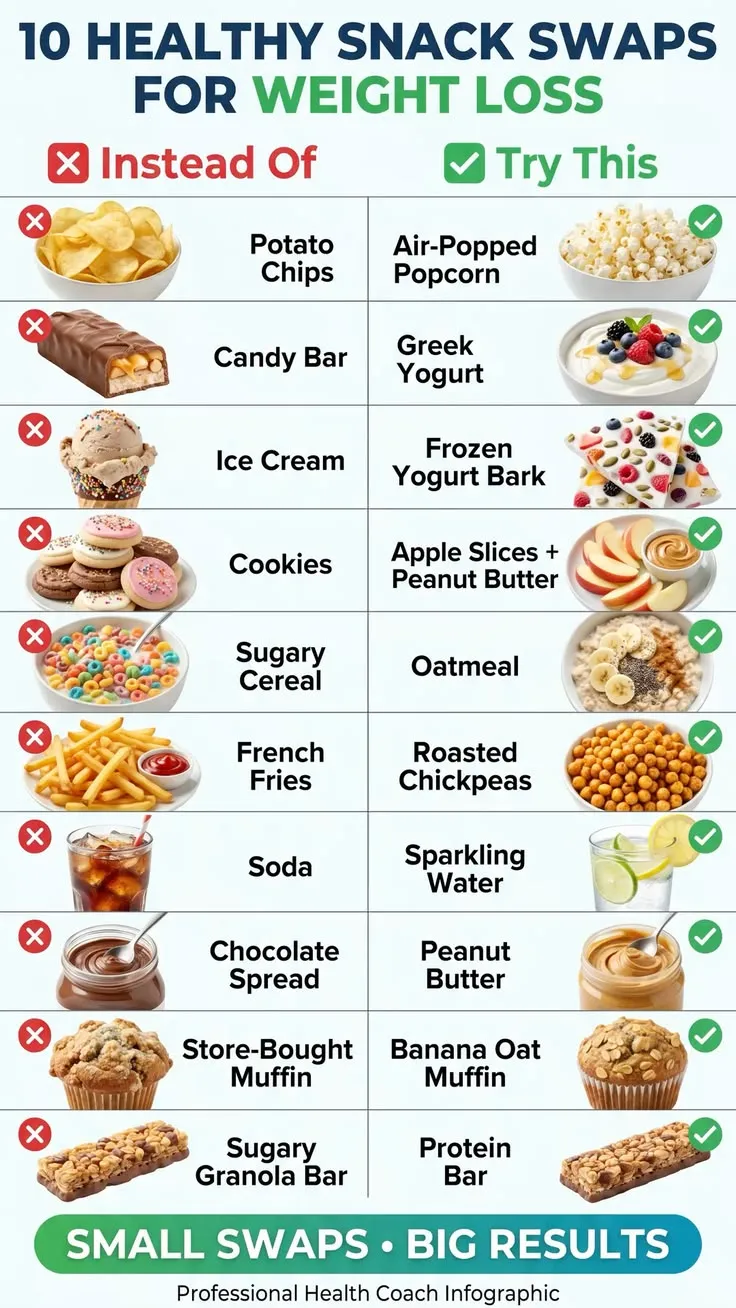
Whole grains in controlled portions add fiber and sustained energy. Whole-grain crackers, a small serving of oatmeal, or air-popped popcorn without excessive salt or butter can fit into a smart snack plan when paired with protein or produce.
Roasted chickpeas, edamame, or a small portion of trail mix made primarily from nuts, seeds, and a limited amount of dried fruit offer portable, satisfying alternatives to chips or sweets.
Practical Snack Combinations
Simple pairings work reliably. Half a cup of plain Greek yogurt topped with fresh or frozen berries provides protein and fiber. A quarter-cup of mixed unsalted nuts with an apple or a few whole-grain crackers delivers healthy fats, protein, and carbohydrates. Hummus with a generous serving of raw vegetables supplies plant protein and fiber. A hard-boiled egg with vegetable sticks or a small piece of fruit is quick and filling. Cottage cheese with pineapple or tomato slices offers a savoury or sweet option depending on preference.
For those who prefer something slightly more prepared, overnight oats made with plain yogurt or milk and fruit, or a small whole-grain wrap with turkey and vegetables, can serve as substantial snacks when longer gaps between meals occur.
What to Limit
Highly processed snacks that are high in added sugars, refined flour, and sodium—such as many chips, cookies, candies, and sugary drinks—provide energy with minimal nutritional return. These items are easy to overconsume and can displace more nourishing foods. Occasional treats can fit into an overall healthy pattern, but they work best when truly occasional rather than routine.
Sugar-sweetened beverages and large specialty coffee drinks often function as liquid snacks that add calories without promoting fullness. Water, unsweetened tea, or sparkling water remain better everyday choices.
Building Sustainable Habits
Stock the kitchen and workplace with ready-to-eat healthy options. Wash and cut produce in advance. Keep a small supply of nuts, yogurt, or whole-grain crackers available. When shopping, prioritise the perimeter of the store where fresh foods are typically located, and read labels on packaged items to identify shorter ingredient lists and lower amounts of added sugar and sodium.
Pay attention to hunger and fullness cues. Snacking in response to genuine hunger supports better energy regulation than snacking driven by habit, stress, or proximity to food. Eating slowly and without distraction improves awareness of satisfaction.
Hydration also influences perceived hunger. Drinking water throughout the day can prevent mistaking thirst for the need to snack.
Special Considerations
Children benefit from snacks that include fruits, vegetables, dairy or fortified alternatives, and protein sources appropriate to their age and preferences. Older adults may need nutrient-dense options that are easy to prepare and chew. People with specific dietary needs or medical conditions should tailor choices accordingly, ideally with guidance from a qualified professional when necessary.
Athletes or highly active individuals often require more substantial snacks that emphasise carbohydrates alongside protein to support recovery and energy demands.
Putting It All Together
Smart snacking is not about perfection or rigid rules. It is about consistently choosing foods that deliver meaningful nutrition in appropriate amounts. Emphasising whole fruits and vegetables, pairing them with protein or healthy fats, controlling portions, and preparing ahead transform snacks from potential dietary liabilities into assets.
Read more – thewhipp.com
